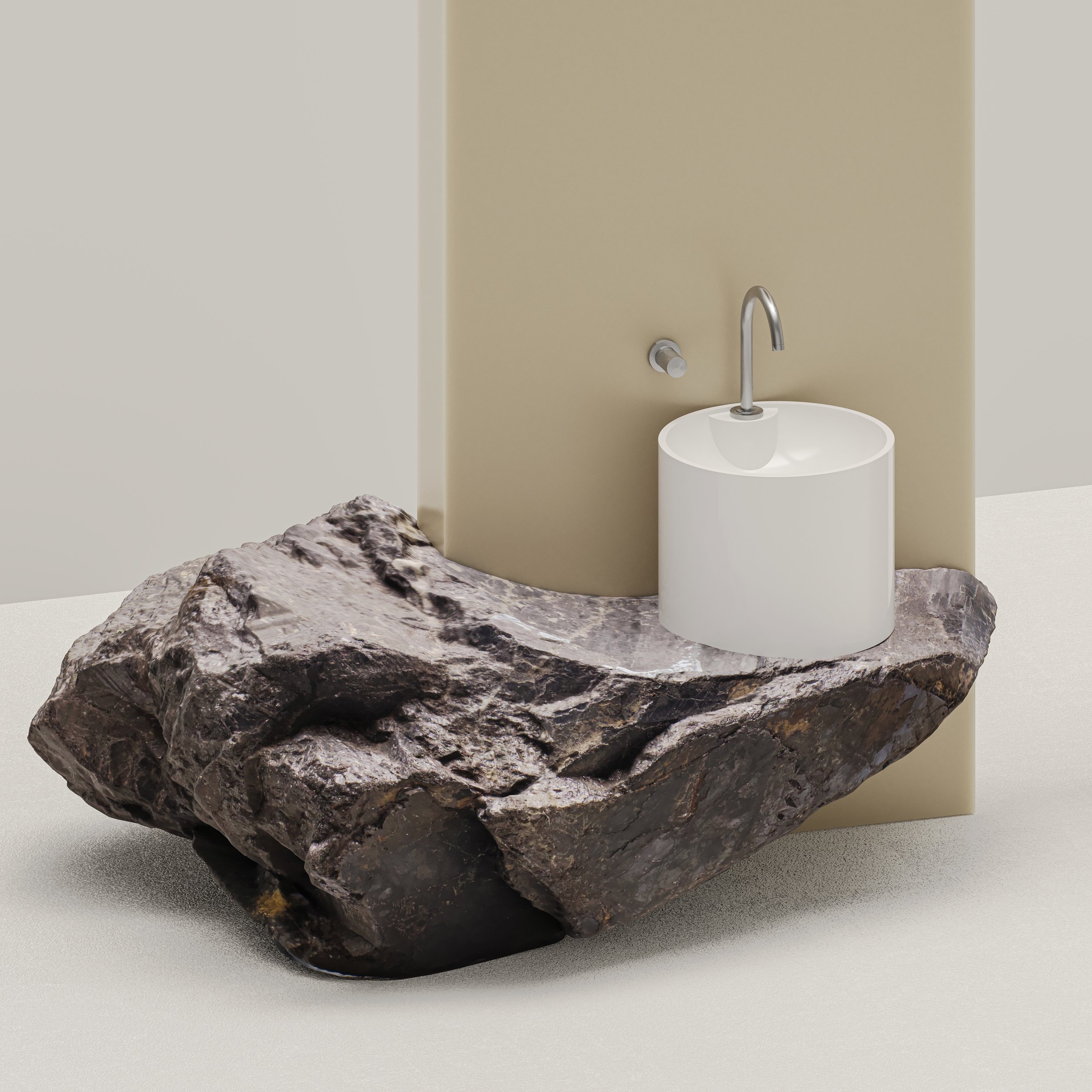
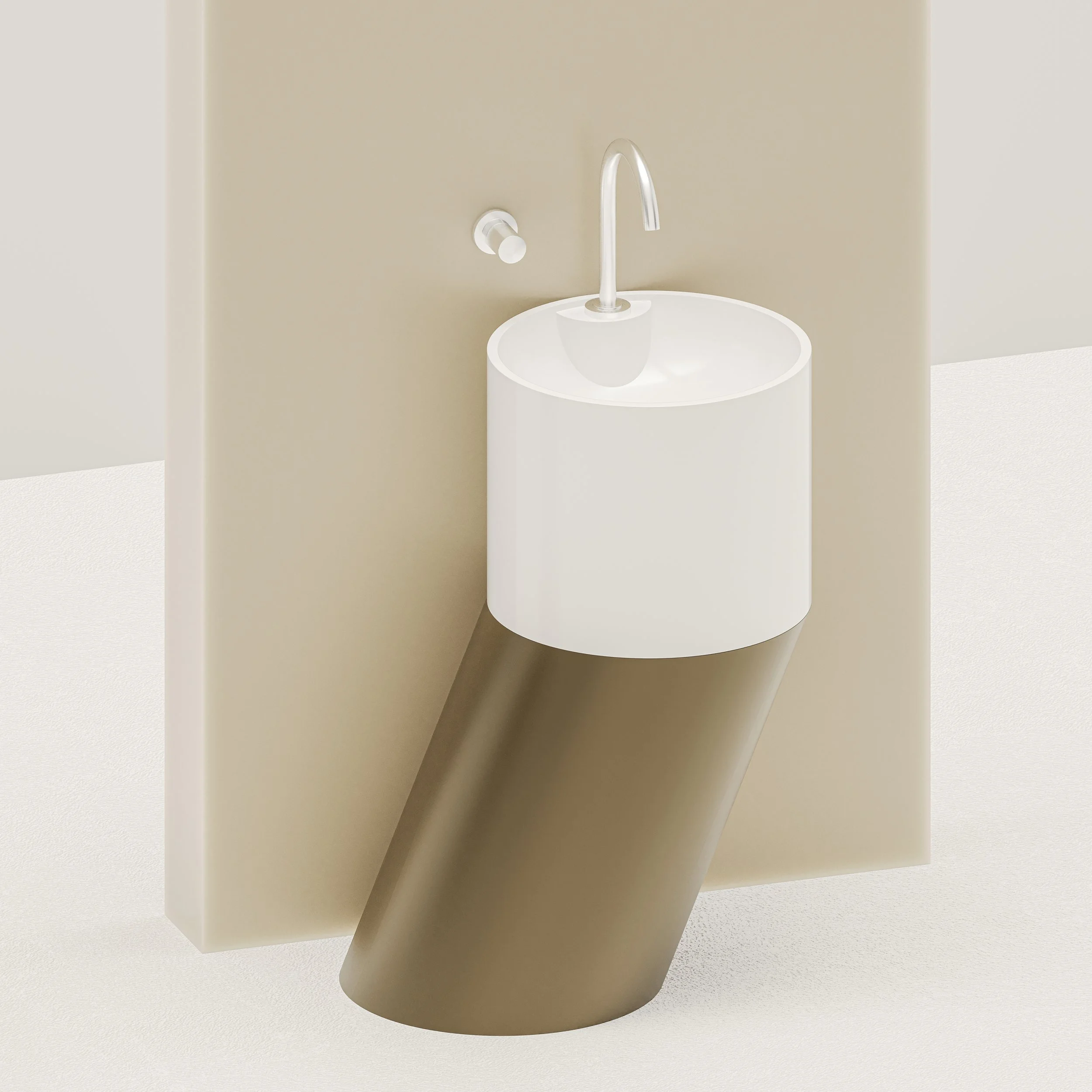
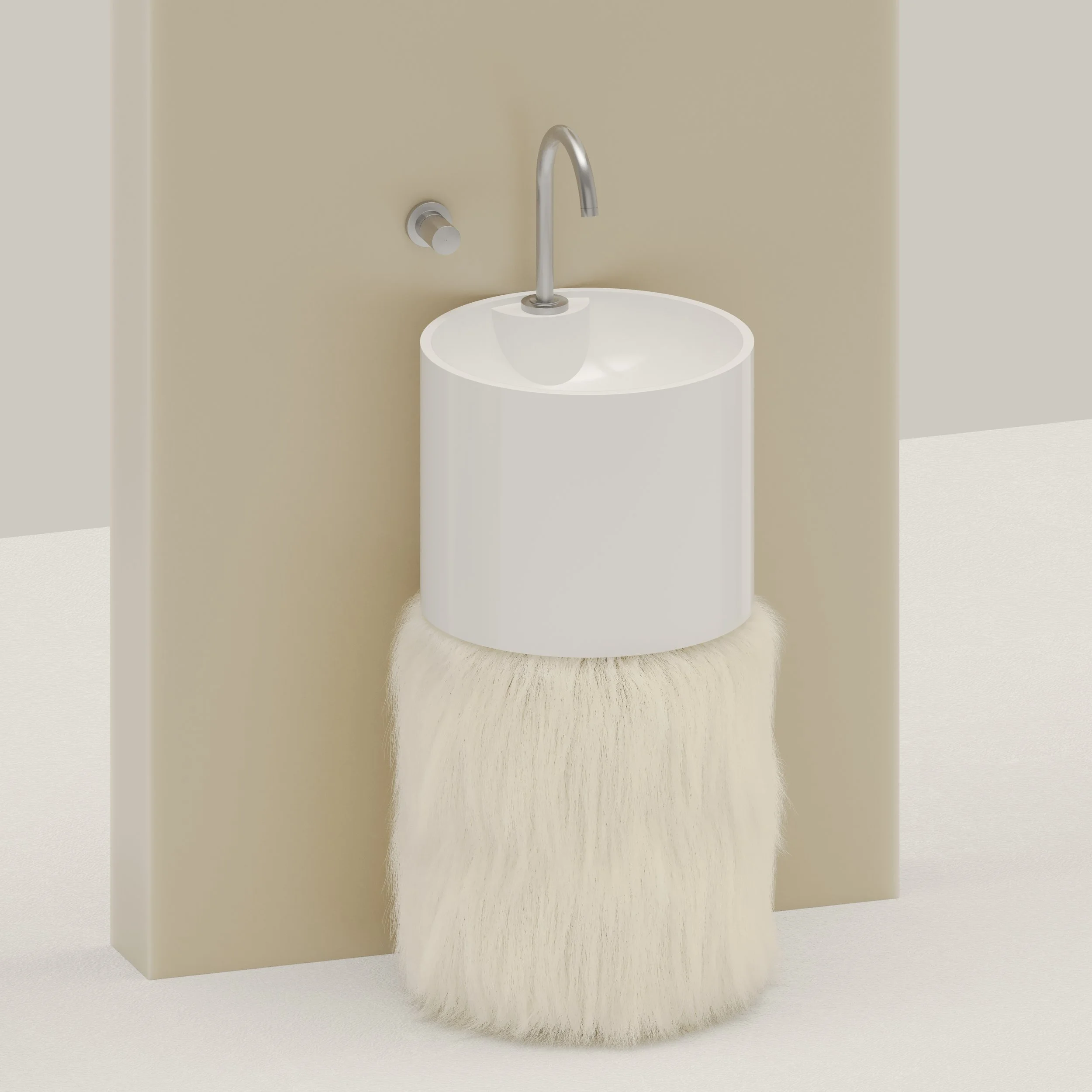
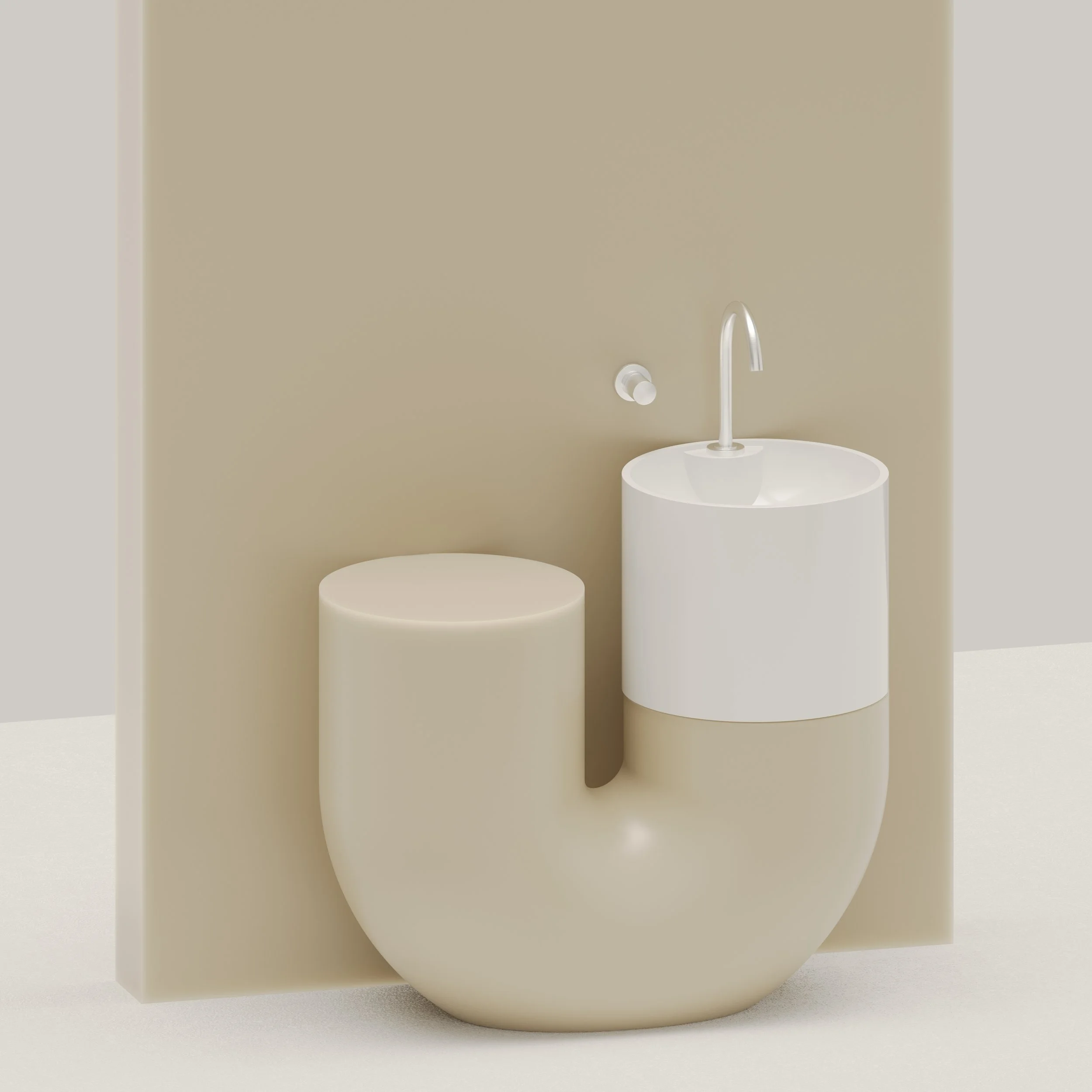
rukh, draws its origin from the ancient persian chess piece. rooted in this legacy, the design embodies a quiet sense of power.
rather than existing solely as a functional bathroom basin, rukh is conceived as a spatial object—an intervention that occupies its environment with clarity and purpose.
its form is not arbitrary; it is guided by the idea that freedom is not the absence of constraint, but the result of choosing a direction. each line, edge, and surface reflects a disciplined gesture, where movement is controlled and decisions are made visible through geometry.
the piece expresses a balance between solidity and openness, echoing the rook’s dual nature as both a defensive stronghold and an active force on the chessboard. in this way, rukh becomes a translation of strategy into form—an object that suggests both stillness and potential motion, anchoring the space while subtly guiding how it is experienced.